Showing posts with label Books. Show all posts

Friday, November 11, 2016

Hidden Meanings in Chinese Art (中國吉祥圖案)

Hidden Meanings in Chinese Art(中國吉祥圖案)
Internal martial arts texts and instruction are full of images and symbolism. In part this is intrinsic, as the nature of internal martial arts implies that mechanical or physical descriptions cannot represent the instructions. In part this is contextual, as any practices naturally comes with its cultural backgroud: names of movements, instructions, criteria all refer back to the same background symbolism.
Hidden Meanings in Chinese Art(中國吉祥圖案) is not a book intended for martial arts practitioners. It is however very useful, as it is quite extensive and detailed. Its organisation, as a thematic dictionnary, allows for browsing through different categories, and moving to related topics.
As a reading companion for a western practitioner, this is a very handy book, even if one is not interested in art in general.

Friday, October 23, 2015

Scholar Warrior

Scholar Warrior
I am more used to go directly to source or scholar texts, both on Martial Arts or Philosophy. The modern commentary or explanation falls usually in two categories: the simplistic and the esoteric. The "Scholar Warrior" is a very good exception though. Not only it provides a overall view on the various topics that a contemporary Daoist Scholar Warrior, it also provides useful insight on some topics. It is certain that the chapters on Qi Gong, Meditation and Medicine are bound to be superficial. However the chapters on applied philosophy are very interesting, by bringing a more down-to-earth to usual difficult to grasp Internal Martial Arts concepts. For example explanations of Simplicity (撲), Noncontention(不爭) and Transcendence of Learning (絕學) allow a refreshing take on Wuwei (無為).

Friday, June 12, 2015

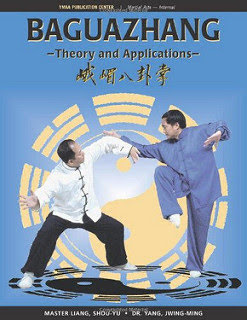
Baguazhang - Theory and Applications

YangJwingMing - Baguazhang Theory and Applcations
As far as a Martial Art goes, Bāguàzhăng (八卦掌) seems to me the least likely to be treated on a book format. The rich and varied traditions, styles and approaches make a pure programatic book - as the ones usually seen for Tàijíquán (太極拳) - look very partial. In particular for a beginner like me, it is difficult to identify what are the good entry points.
This book overcomes these difficulties. Even if the technical overview is related to Swimming Body Baguazhang, a specific tradition, the content is laid out in a way that the western beginner can follow. And as any book on martial arts, it has to be approached as a support for the practice. The main use I have for this book is as a reference. The chapters on The Essence of Baguazhang and Training Concepts are extremely useful to frame the instruction received in the regular practice. It is really a companion book for the Baguazhang beginner.

Friday, July 26, 2013

Ancient Way to Keep Fit Antigos Métodos para Manter a Forma

The book in itself is a beautiful object, what I would classify as an arty book. It contains a rather long list of Qì​gōng (氣功) routines from different times and periods. Its paintings and drawings are well reproducted, it is printed on quality paper, the ensemble is quite a nice catalog of ancient routines.
It should not though be taken for an instructional book. There is no such intention, as far as I see: there are no descriptions of the routines, no details, no additional instructions. I would argue that it is impossible to learn Qì​gōng (氣功) or Internal Martial Arts (内家武術) from any book. This book has no such ambition and is still a good companion, its value is on the historical perspective that it provides.
Este livro é em si mesmo um belo objeto, um livro que tende ao livro de arte. Ele contém uma lista longa de rotinas de Qì​gōng (氣功) de diferentes períodos. As pinturas e desenhos routines são bem reproduzidas, impressas em papel de qualidade, o todo é um catálogo interessante de rotinas antigas.
Entretanto, não se deve confundir este livro com um manual. Pelo que eu vejo, a intenção não existe: não há descrição das rotinas, nenhum detalhe, nenhuma instrução adicional. Na minha opinião é impossível aprender Qì​gōng (氣功) ou Artes Marciais Internas (内家武術). Este livro não tem essa ambição e mesmo assim é interessante, seu valor reside na perspectiva histórica que ele proporciona.

Friday, May 24, 2013

Cheng Tzu's Thirteen Treatises on T'ai Chi Ch'uan (鄭子太極拳十三篇)Os Treze Tratados sobre T'ai Chi Ch'uan de Mestre Cheng (鄭子太極拳十三篇)

One of the first books I bought on Tàijíquán (太极拳), it is certainly one of my classics. The book is divided in two sections, the second a more traditional instructional manual of the Yáng Style form in the way that Zhèng Mànqīng (鄭曼青) taught it.
The piece that is really interesting is the first section, the one that gives the title of the book. The thirteen treatises are insightful meditations on the nature, mechanics and impact of Tai Chi Chuan. They are rather clear explanations, away from the jargon of the art, that come from the personal experience of a master. Among the treatises, there are two I am particularly fond of: "Changing the Temperament" and "Strength and Physics".
"Changing the Temperament" is a very personal opinion on impacts of the practice on the practicioner psychology. What strikes me in the text is the modesty of the conclusion, or its non conclusion. He asserts that, despite his own experience, the real impacts on temperament remain to be demonstrated. Zhèng Mànqīng (鄭曼青) takes a refreshing position if compared to more usual and sometimes dogmatic views on the impacts of Tàijíquán (太极拳).
"Strength and Physics" is a clear explanation of the mechanics at play in the practice, an explanation that at the same time is accessible as it avoids the jargon and down-to-earth as it avoids some of the far-fetched pseudo-scientific comparisons of Tàijíquán (太极拳) and physics that one can find in western books.
Este é um dos primeiros livros que eu comprei sobre (太极拳), é certamente um dos meus livros de cabeceira. O livro é dividido em duas seções, a segunda é um manual de tipo usual do estilo Yáng, na maneira em que era ensinado por Zhèng Mànqīng (鄭曼青).
A parte realmente interessante é a primeira seção, a que dá o título ao livro. Os Trez Tratados são meditações sobre a natureza, a mecânica e o impacto do Tai Chi Chuan. São explicações claras, longe do jargão da arte, que vêm da experiência pessoal do mestre. Entre os tratados, dois em especiam merecem atenção: "Transformando o Temperamento" e "Força e Física".
"Transformando o Temperamento" é uma discussão baseado na experiência própria do mestre dos impactos da prática na psicologia do praticante. O que impressiona de imediato no texto é a humildade da conclusão, ou da não conclusão. Ele afirma que, apesar da sua própria experiência, os impactos reais ainda precisam ser demonstrados. The assertion that the real impacts on temperament remain to be demonstrated. Zhèng Mànqīng (鄭曼青) toma uma posição que se diferencia das visões mais usuais e dogmáticas dos impactos do Tàijíquán (太极拳).
"Força e Física" é uma explicação clara da mecânica em jogo durante a prática, uma explicação que é ao mesmo tempo acessível e evita o jargão; e prática, já que evita algumas das comparações pseudo-científicas mais delirantes entre o Tàijíquán (太极拳) e a física que podem ser encontradas em livros ocidentais.

Friday, October 26, 2012

Tai Chi Sword (太極劍) and Other Writings by Chén Wēimíng (陳微明)

An interesting book, one of the earliest descriptions of the Yang Style sword form (楊氏太極劍).Chén Wēimíng (陳微明) has an important place in the genealogy of the Yang style: both as a student of Yáng Chéngfǔ (楊澄甫) and as a documentarist that helped to put in paper his teacher's principles.
As a instructions manual, it is useful only to help memorization and identification of movements. As a document, it is very valuable for the serious practicioner interested in the evolution of the style. The preface by Barbara Davis is particularly informative, not least because of her own long experience on the topic.

Friday, June 8, 2012

A Study of Xing Yi Quan (形意拳學) by Sūn Lùtáng (孫祿堂) translated by Albert Liu

This is certainly the reference book on Xíngyìquán (形意拳). The author, Sūn Lùtáng (孫祿堂) is one of, if not the, main masters of internal martial arts in the 20th century. For this aspect alone, it would be a key book for the practicioner.
As a manual, it is a rather complete coverage of the main basic aspects of the art. To my knowledge is one of very the few books that go beyond the Five Fists (五行拳) to the Twelve Animals (十二形拳) of Hebei and Anshenpao (安身炮). Each movement is presented with a "theoretical explanation", to me the most interesting parts, followed by the movements themselves, which are always better seen with a qualified teacher than in a book.
The main interest is that Sūn Lùtáng (孫祿堂) developed the main systematization of the Internal Martial Arts(內家). In his books for the first time cosmological taoist terms like Wú​jí (無極), Tài​jí (太極) and Liǎng​yí (兩儀) are presented to explain specific steps of the practice. Even though it is applied to the other internal arts, this systematization is particularly striking for Xíngyìquán (形意拳).

Saturday, January 14, 2012

The Essence and Applications of Tai Chi Chuan (太極拳體用全書) by Yáng Chéngfǔ (楊澄甫) translated by Louis Swaim

Classics are the books that everyone should read and almost nobody does. This 1934 book by Yáng Chéngfǔ (楊澄甫) is a classic in its own right, as it was one of the books of its generation to open wide the tradition. It was not the only one, Sūn Lùtáng (孫祿堂) and others have done likewise. Moved by the nationalistic fervor of the time, they all wanted to share practices that would strenghen fellow countrymen. Being one among others does not diminish its merits, as the company is very noble, and this is one the first veritable book on the Yáng Style Tàijíquán (楊氏太极拳).
It reads like a manual, as it is supposed to do. The translator, Louis Swaim goes far in lifting ambiguity and clarifying the text for the western reader. More than the instructions themselves, the main interest for me is in the pictures: seeing the postures executed by a grand master is always a lesson in itself, even though a beginner like me cannot capture much of what is really going on.

Saturday, November 12, 2011

Chinese Boxing: Masters and Methods by Robert W. Smith

Beyond being a pioneer book in introducing Chinese Martial Arts to western audiences, I have some other reasons to appreciate « Chinese Boxing : Masters and Methods » by Robert W. Smith.
First, it is clearly a personal account of Mr. Smith’s own experiences in Taiwan in the beginning of the sixties. It does not try to become a manual or guidebook: often western authors create handbooks from their personal experience; in most cases the results are sort of dogmatic books spelling intimate truths. Mr. Smith’s does not have that tone, and the accounts he brings are both interesting for the practice and inspiring.
Second, Mr. Smith does not slide into void Chinese explanations or new age mysticism (which is a criticism that even this blog could receive). He keeps his feet on solid ground and he would rather bring his subject to his own experiences, either relating them to his training in Judo, or to our own western cultural background. He looks for bridges so he can grasp the meaning, this can be seen on the many quotations he makes in the text (like on I particularly appreciate, G.K. Chesterton’s: “ I find that most round things are nice, particularly Eternity and a baby.“). In this book he is not a purist, he is looking to build his learning on his references.
Third, learning Chinese Martial Arts is a personal experience, and the accounts provided by Mr. Smith illustrate how the Arts. Some insight comes particularly from the chapter on Cheng Manching, the most extensive, where he reports some of the exchanges and methods of the master. For example, I recall reading that when students started to sweat, Cheng Manching (鄭曼青) would declare a pause on the training, which in itself is a lesson.
Mr. Smith would become a sort of role model for the “western that met a Chinese Master” that we can find from the end of the sixties on. Even though there are the good and the bad in this kind of figure, my best teachers were in the same position. This generation of western teachers is the bridge to the traditional knowledge and in my opinion the more they approach the style of Mr. Smith personal accounts in his book, the more valuable their transmission is.

Wednesday, January 6, 2010

Tai Chi Secrets by Yang Jwing Ming (楊俊敏)


This collection of original Tàijíquán (太極拳) texts, translations and commentaries is probably the most complete to date. Master Yang Jwing Ming (楊俊敏) covers a lot of material on the three books: Tai Chi Secrets of the Yang Style (太極拳楊氏先哲秘要), Tai Chi Secrets of the Wu Style (太極拳吳氏先哲秘要) and Tai Chi Secrets of the Wu & Li Styles (太極拳武李氏先哲秘要). There is material for a life of study and the books complement quite well the other handbooks proposed by the prolific Master Yang Jwing Ming (楊俊敏).
Some of the material is also present on the Lost Tai Chi Classics from the Late Ch'ing Dinasty, by Douglas Wyle. But the approach is different, as the "Lost Tai Chi Classics" cover it from the scholar point of view, here the texts are presented from the practicioner point of view.

Monday, January 4, 2010

Lost T'ai Chi Classics from the Late Ch'ing Dinasty by Douglas Wile

A necessary source for anyone that wants to have access to the source texts, this book is in the bibliography of all other books I read on the subject.
Beyond presenting a number of key texts both in Chinese and in translation, the author Douglas Wile presents a wide panorama of the social, cultural and political motivations for the emergence of Tai Chi Chuan as a martial art. He also discusses the origins and history of the texts, in a balanced and scholar way.
By reading these book, it is possible to have access to the sources without falling in mystifications or idealisations that would take the praticant off-path.

Wednesday, December 30, 2009

The Tao of Tai Chi Chuan and The Tao of Meditation by Jou Tsung Hwa (周宗樺)

Arguably the best book around on the topic of Tàijíquán (太極拳), "The Dao of Tai Chi Chuan" (太極拳之道) is both concise and deep. Its companion "The Tao of Meditation" (靜坐開悟之道) share the same characteristics. The approach is through principles, rather than routines, and the explanations given open the doors for further research. Some of the texts and terms mentioned by Master Jou Tsung Hwa (周宗樺) in the book make reference to ancient and classic works that few other authors dare to approach.
There exists a third volume, called "The Tao of I Ching", which for me seems less interesting, as much in it is quite redundant with other books on the same topic.
Master Jou Tsung Hwa (周宗樺) is one of the exponents of the first generations that brought Tàijíquán (太極拳) to the west, and a major Internal Martial Arts community and festival was initiated by him in the U.S.